How to Stop Freezing Up in Bed

You want to be present with your partner, but your mind starts moving faster than the moment itself. Your body tightens, your attention shifts inward, and intimacy begins to feel like something you are observing instead of experiencing. Research on spectatoring during sex describes this kind of self-critical attention as a factor associated with sexual difficulties. Freezing up during sex can be unsettling, but it often reflects a nervous-system response rather than a lack of attraction or desire.
When sexual pressure, stress, or fear of repeating a difficult experience builds, the body may shift into protection mode. That can make arousal feel harder to access, even when you want to be close to your partner. The goal is not to force your body to cooperate on command. It is to give your mind and body clearer signals that the moment is safe, connected, and not a performance test.
This guide explains why freezing up can happen, what to do in the moment, and how practical tools such as breathwork, grounding, sensate focus, communication, sleep support, and appropriate medical guidance may help.
Key Takeaways
- Freezing during sex can be a stress response, not a character flaw or lack of desire.
- Anxiety may shift attention away from sensation and toward self-monitoring, which can make arousal more difficult.
- Breathwork and grounding exercises can help bring attention back to the body.
- Sensate focus can reduce performance pressure by rebuilding intimacy around touch, curiosity, and sensation.
- When erectile concerns are part of the pattern, a healthcare provider can help determine whether medical support is appropriate.

Understanding Performance Anxiety in Men: What It Is and Why It Happens
Performance anxiety during sex is not simply nervousness. It is the point where worry begins to interfere with attention, arousal, and physical response.
The Difference Between Physical and Psychological ED
Sexual arousal involves both the mind and body. Relaxation, attention, blood flow, and stimulation all play a role. When stress or anxiety becomes dominant, the body can shift toward a fight-or-flight state. That response is useful during real danger, but it can work against sexual arousal during intimacy.
Psychological or situational ED often shows up in specific contexts. For example, someone may notice erections during masturbation or upon waking, but struggle during partnered sex. Physical ED is often more consistent across situations and may be connected with underlying health factors. Many people experience a mix of both, which is why a medical evaluation can be helpful when symptoms persist.
Common Triggers for Performance Anxiety
Understanding the pattern can make it easier to interrupt.
Internal triggers may include:
- Worrying about satisfying your partner
- Comparing yourself to past experiences or unrealistic standards
- Monitoring your erection instead of noticing pleasure
- Thinking, "This is going to happen again"
External triggers may include:
- A new partner or relationship dynamic
- Pressure around a special occasion
- A previous difficult sexual experience
- Relationship tension or unresolved conflict
People who are used to controlling outcomes in work or other areas of life may find intimacy especially challenging because sex requires presence, communication, and flexibility rather than perfect execution.
Breaking the Freeze: Practical Strategies to Combat Performance Anxiety
Because freezing up often starts in the body, it helps to use body-based strategies first. Thought-based reframing can be useful, but it may work better once the body is less activated.
Breathwork for Nervous System Regulation
Breathing gives you a direct way to slow down and reconnect with your body.
Box breathing
- Inhale for 4 counts
- Hold for 4 counts
- Exhale for 4 counts
- Pause for 4 counts
- Repeat for several rounds
Long-exhale breathing
- Inhale through your nose for 4 counts
- Exhale slowly for 6 to 8 counts
- Keep your shoulders relaxed
- Repeat until your body feels less tense
Belly breathing
- Place one hand on your chest and one on your stomach
- Breathe so the stomach hand moves more than the chest hand
- Keep the breath slow and steady
- Use this before intimacy or when you notice your body tightening
Grounding Techniques for the Moment
Grounding brings attention away from anxious prediction and back to what is happening now.
The 5-4-3-2-1 technique
- Name 5 things you can see
- Notice 4 things you can physically feel
- Identify 3 sounds
- Notice 2 scents
- Focus on 1 taste or breath sensation
During intimacy, this can be simpler. Focus on the warmth of skin, the pressure of touch, or the rhythm of breathing. The point is not to make every anxious thought disappear. The point is to give your attention somewhere steadier to land.
Mindfulness for Intimacy: Cultivating Presence and Connection
Mindfulness can help interrupt the habit of watching and judging yourself during sex. A systematic review on mindfulness-based interventions for sexual dysfunctions notes that mindfulness-based therapies are used in the treatment of sexual dysfunctions and reviews evidence for their clinical efficacy.
Simple Mindfulness Exercises Before Sex
Pre-intimacy centering
- Sit or lie near your partner for a few minutes
- Take several slow breaths together
- Notice where your body feels tense
- Let your attention move from thoughts to physical sensation
- Set a simple intention, such as "stay curious" or "slow down"
Body scan awareness
- Start at your feet and move attention upward
- Notice tightness, warmth, pressure, or tingling
- Release tension where you can
- Avoid judging what you notice
Staying Present During Intimacy
When your mind shifts into performance monitoring, gently redirect attention to sensation.
You might ask yourself:
- What do my hands feel right now?
- Where do I feel warmth or pressure?
- What sound or breath rhythm can I notice?
- What pace feels comfortable?
You do not need to fight every thought. Acknowledge the thought, then return to the body.
Sensate Focus Exercises: Rebuilding Intimacy and Ease
Sensate focus is a structured touch practice used in sex therapy to reduce pressure around performance and outcomes. A review of sensate focus touch describes it as a foundation of modern sex therapy and notes its relationship to mindfulness and somatic approaches.
Step-by-Step Sensate Focus Guide
Early phase: non-genital touch
- Take turns touching each other while avoiding genitals and breasts
- The receiver focuses on sensation rather than response
- The giver focuses on curiosity rather than performance
- Intercourse is off the table during this phase
Middle phase: broader touch without goals
- Gradually include more areas of the body
- Keep the focus on sensation, not erection or orgasm
- Pause if pressure starts building
- Talk afterward about what felt calming or enjoyable
Later phase: gradual return to sexual activity
- Reintroduce sexual activity slowly
- Keep communication open
- Step back to earlier phases when needed
- Treat the process as practice, not a test
Why Sensate Focus Can Help
Freezing up often comes with the "spectator" role: watching, evaluating, and predicting your own performance. Sensate focus changes the task. Instead of trying to prove that everything will work, you practice experiencing touch without a target outcome.

Addressing Underlying Intimacy Issues in Men and Relationships
Sometimes freezing up is not only about sex. It can also reflect relationship stress, fear of vulnerability, or unresolved tension.
Recognizing Signs of Intimacy Barriers
Possible signs include:
- Avoiding emotional conversations
- Feeling disconnected even during physical intimacy
- Using sex as the main way to seek closeness
- Carrying past relationship experiences into the current relationship
- Feeling pressure to appear confident instead of being honest
Building Stronger Emotional Bonds
Small, consistent habits can help reduce pressure in the bedroom.
- Share one honest feeling each day
- Create non-sexual rituals of connection
- Address conflicts before they build up
- Talk about what feels good without turning it into a performance review
- Make space for closeness that does not have to lead to intercourse
The Role of Sleep in Sexual Health and Reducing Anxiety
Poor sleep can make stress feel louder and self-regulation harder. A review on sleep and sexual dysfunction notes that sleep disorders can be considered when evaluating sexual dysfunction.
Why Quality Sleep Can Matter
Poor sleep may:
- Increase irritability and anxiety
- Make it harder to stay emotionally regulated
- Reduce energy and interest in intimacy
- Make physical stress feel more difficult to manage
Practical Sleep Improvements
- Keep sleep and wake times consistent when possible
- Limit screens before bed
- Keep the bedroom cool and dark
- Write down racing thoughts before sleep
- Use progressive muscle relaxation or slow breathing at night
When Medical Support Helps: Exploring BlueChew
Medication is not a replacement for addressing stress, communication, or relationship patterns. But when erectile concerns are part of the freeze response, medical support may help reduce one source of pressure while you work on the behavioral side.
How BlueChew Supports Body-Based ED Concerns
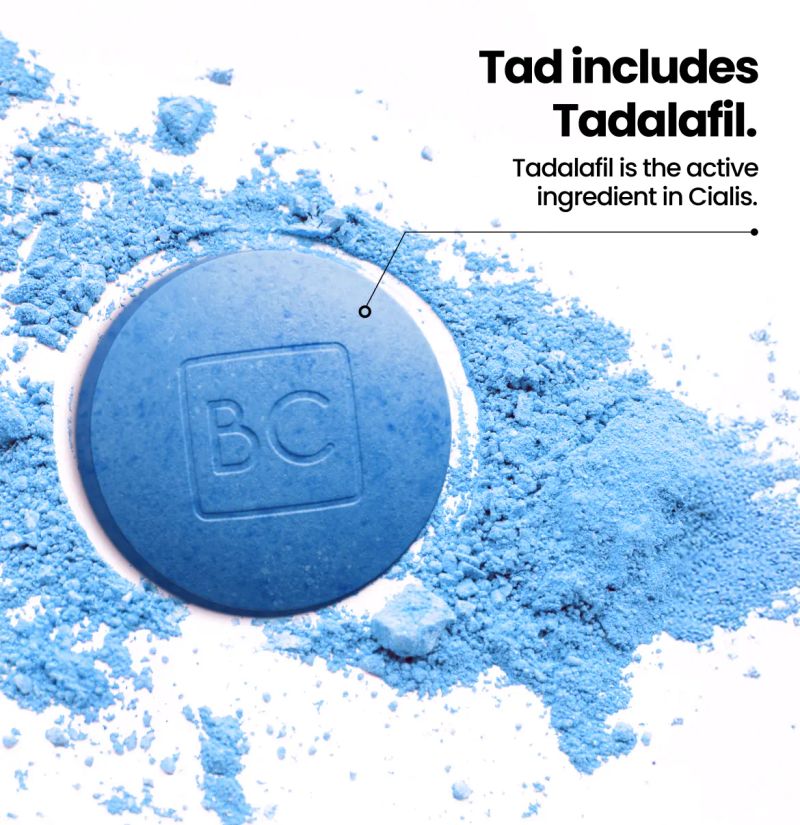
BlueChew provides compounded prescription medications containing the active ingredients sildenafil, vardenafil, and tadalafil. Sildenafil, vardenafil, and tadalafil are the active ingredients in Viagra, Levitra, and Cialis, respectively.
For some men, addressing the physical component of ED can make it easier to stay engaged instead of scanning for signs that something will go wrong. A healthcare provider can help determine whether a PDE5 inhibitor or another option is appropriate.
GOLD may be worth discussing with a provider for men interested in a sublingual option that includes sildenafil, tadalafil, oxytocin, and apomorphine. Because arousal, stress, and erectile function can overlap, it is best to frame GOLD as one possible provider-reviewed option rather than a guaranteed solution for psychological ED.
BlueChew's complete product lineup includes:
- SIL: 30 mg or 45 mg sildenafil, from $2.95/tablet, works in 15 minutes, lasting up to 6 hours
- TAD: 6 mg or 9 mg tadalafil, from $3.58/tablet, effective within 15 minutes, lasting up to 36 hours
- VAR: 8 mg vardenafil, from $4.34/tablet, takes effect in 15 minutes, lasting up to 6 hours
- DailyTAD: 9 mg tadalafil plus 7 essential vitamins, $2.23/tablet, lasting up to 36 hours
- MAX: 45 mg sildenafil + 18 mg tadalafil combo, $5.63/tablet, lasting up to 36 hours
- VMAX: 14 mg vardenafil + 18 mg tadalafil combo, $5.63/tablet, lasting up to 36 hours
- GOLD: sildenafil, tadalafil, oxytocin, and apomorphine sublingual tablet, from $7.30/tablet, lasting up to 36 hours
Learn more about how fast GOLD works or review BlueChew products to understand available options.
Frequently Asked Questions
Can performance anxiety cause erectile dysfunction?
Yes. Performance anxiety can contribute to erectile difficulties because anxiety may shift the body into a stress state and pull attention away from arousal. This does not mean the problem is imaginary. Psychological stress can have real physical effects, and recurring worry can make the pattern harder to break.
How quickly can BlueChew medications work to help with performance concerns?
Some BlueChew products are listed as working within 30 minutes, while MAX and GOLD are listed as lasting up to 36 hours. Timing and suitability can vary by person, so the best option should be discussed with a provider.
Is BlueChew suitable for psychological ED, or just physical causes?
BlueChew products are prescribed for erectile dysfunction symptoms by supporting erectile function. If ED is mostly psychological, medication may still be discussed as part of a broader plan that includes stress reduction, communication, and behavioral strategies.
Will using an ED medication make me reliant on it?
ED medications are not generally discussed in terms of physical dependency in the same way as addictive substances. Still, it is understandable to worry about becoming psychologically dependent on any support. A provider can help you use medication appropriately while you continue working on the anxiety pattern.
How can I discreetly get help for performance anxiety and ED?
You can start by speaking with a licensed healthcare provider about your symptoms and whether ED treatment is appropriate. BlueChew offers an online process for provider review and prescription options when appropriate, which may feel more private than starting with an in-person visit.
This article is provided for informational purposes only and does not constitute medical advice. The information presented is not a substitute for professional medical advice, diagnosis, or treatment. Always consult your healthcare provider to discuss the risks, benefits, and appropriateness of any treatment.
BlueChew offers access to healthcare providers who may prescribe compounded medications for the treatment of erectile dysfunction.
The featured products include compounded medications that have not been approved by the FDA. Compounded medications may be prescribed under federal law but are not the same as, nor are they generic versions of, any FDA-approved medication. The FDA does not review compounded medications for safety, effectiveness, or manufacturing quality of compounded products. A prescription will only be written if deemed appropriate after the digital consultation by the licensed medical provider. Individual results may vary.
BlueChew is not a compounding pharmacy but a telemedicine service that links patients to licensed medical providers.